Amelia Barker (she/her)
About AuthorAugust 14, 2026
in
GardeningHow To Grow Swiss Chard In The Portland Area
Swiss chard is a wonderful addition to the home garden for its productivity, culinary utility, and beauty. Chard is a member of the Amaranth family and is closely related to beets and spinach. It produces glossy dark green leaves on vibrantly colored stems in hues of red, orange, gold, and white that can be steamed, sauteed, or mixed into soups to add some nutritional oomph to any recipe. While not immune to garden pests, with a little know-how you could be eating swiss chard all winter (or summer) long!
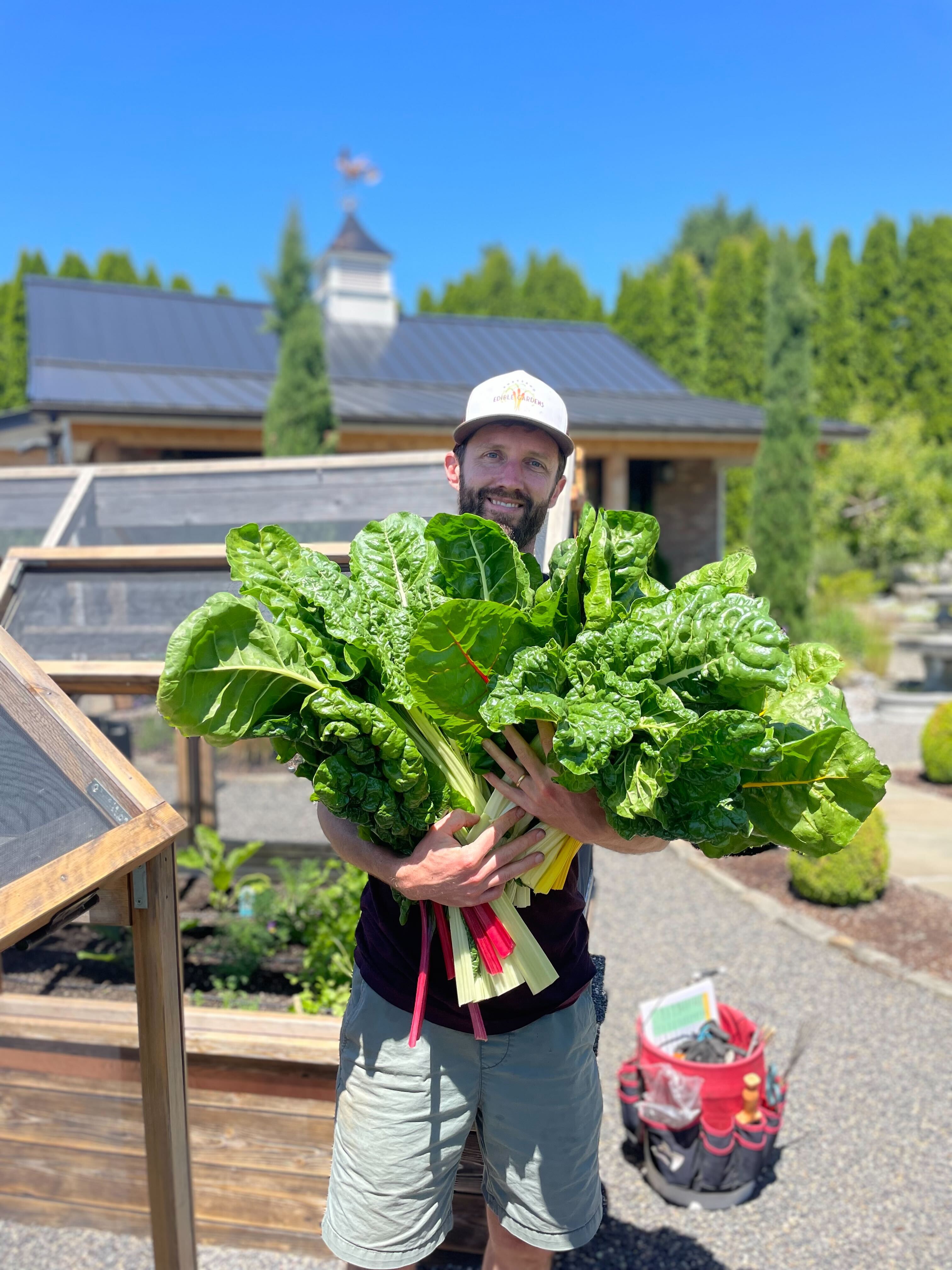
'Bright Lights' rainbow chard abundance!
Our Favorite Varieties
There are a range of swiss chard varieties to choose from that, frankly, don’t vary much in flavor. What does vary is the stem color and size of each plant. For the classic mix of rainbow hues and midsize plants, try growing Bright Lights. If you want almost shockingly huge plants with thick white ribs that produce all season long, go for Fordhook Giant. And for something a little different (and locally adapted!), try Joy’s Midnight, a variety with deep burgundy leaves and luminescent orange ribs on slightly smaller-statured plants.
No matter which variety you pick, for best results we recommend growing chard from starts rather than seeds. It is common for nurseries to sell starts with multiple plants growing in a cluster per cell. Using scissors or pruners, be sure to thin down to a single plant per start when planting out so that the chard isn’t crowded and can reach its full colorful glory at maturity.
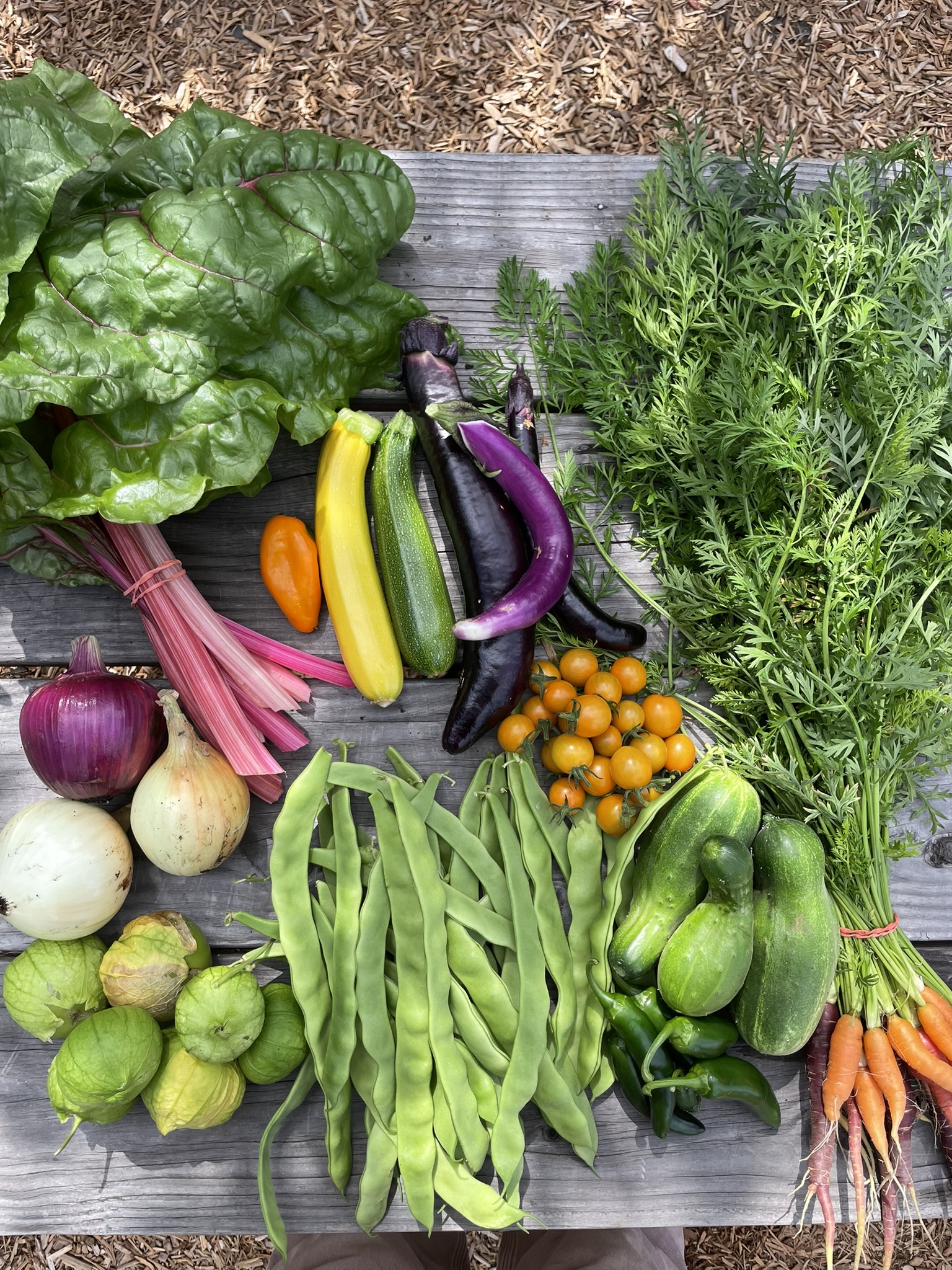
Swiss chard rounding out an abundant summer harvest.
Tips for Planting
Swiss chard grows best when planted in full sun (at least 6 hours) and in rich soil. While not a particularly heavy feeder like kale or tomatoes, chard can be harvested off of for many months, so we set it up for success by sprinkling approximately ⅛ cup of balanced fertilizer in the hole at planting. Each plant requires quite a bit of space on all sides, so we plant in rows that are 12’’ wide with 12’’ between each plant.
While a single chard planting can be maintained throughout the entire year, we have found that in our Pacific Northwest growing climate, it is best to plant chard once in the early spring (late February - April) for plants that produce in spring and summer. Plants tend to “bolt” (start to flower) or succumb to disease once hot summer temperatures hit. Mid-August through early September is a great time to plant out another round of chard to keep the harvest going into fall. You will be rewarded with plants that develop a strong root system through the late summer and produce lots of leaves for cooking all winter long!
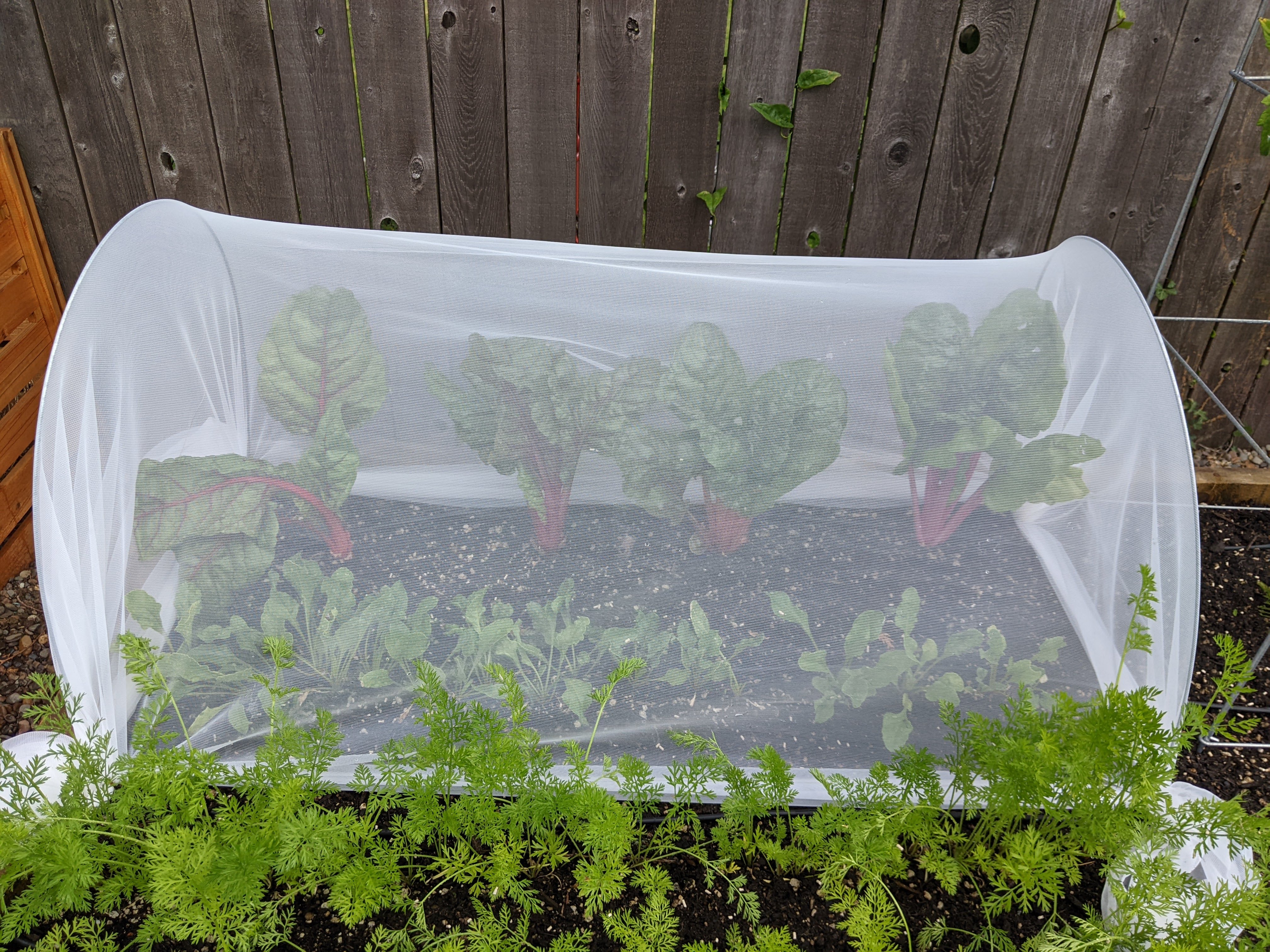
Young chard plants protected from leaf miners by an insect netting tunnel.
Common Chard Pests and How to Prevent Them
Have you ever grown chard only to have irregular yellowish-white blotches appear on the leaves, slowly killing sections of the plant? This common damage is caused by leafminer larvae - the pupal stage of the leafminer fly that burrows through the leaves after they hatch. At first the damage manifests as distinctive white tracks in the leaves that slowly spread into larger blotches of opaque dead tissue that eventually turn brown. Leafminers love to feed on chard and their close cousins, beets and spinach. This is particularly detrimental in chard because the leaves take longer to mature than quick-growing spinach so the damage has time to spread. It is less consequential to beet plantings because the damage does not spread to the beetroot itself.
So, what to do about leafminers on your chard? Our best tip is to cover the plants immediately after planting with porous insect netting that prevents the flies from landing on the plants to lay their eggs. Check your local nursery to see if they sell smaller sections of netting like this ProtekNet Insect Barrier. We set up flexible wire hoops at each end of a row of chard, cut a piece of insect netting to size, and secure it to the soil with landscape staples. When you are making your little tunnel of netting, be sure to account for the mature size of the chard plants and set up your hoops accordingly!
If you are not able to source insect netting, your other option is to monitor your plants closely for lines of tiny white eggs and manually remove them when you find them. Check the underside of each leaf of chard once a week for eggs throughout the growing season - leafminers can survive through the winter in our climate, so don’t let your guard down!
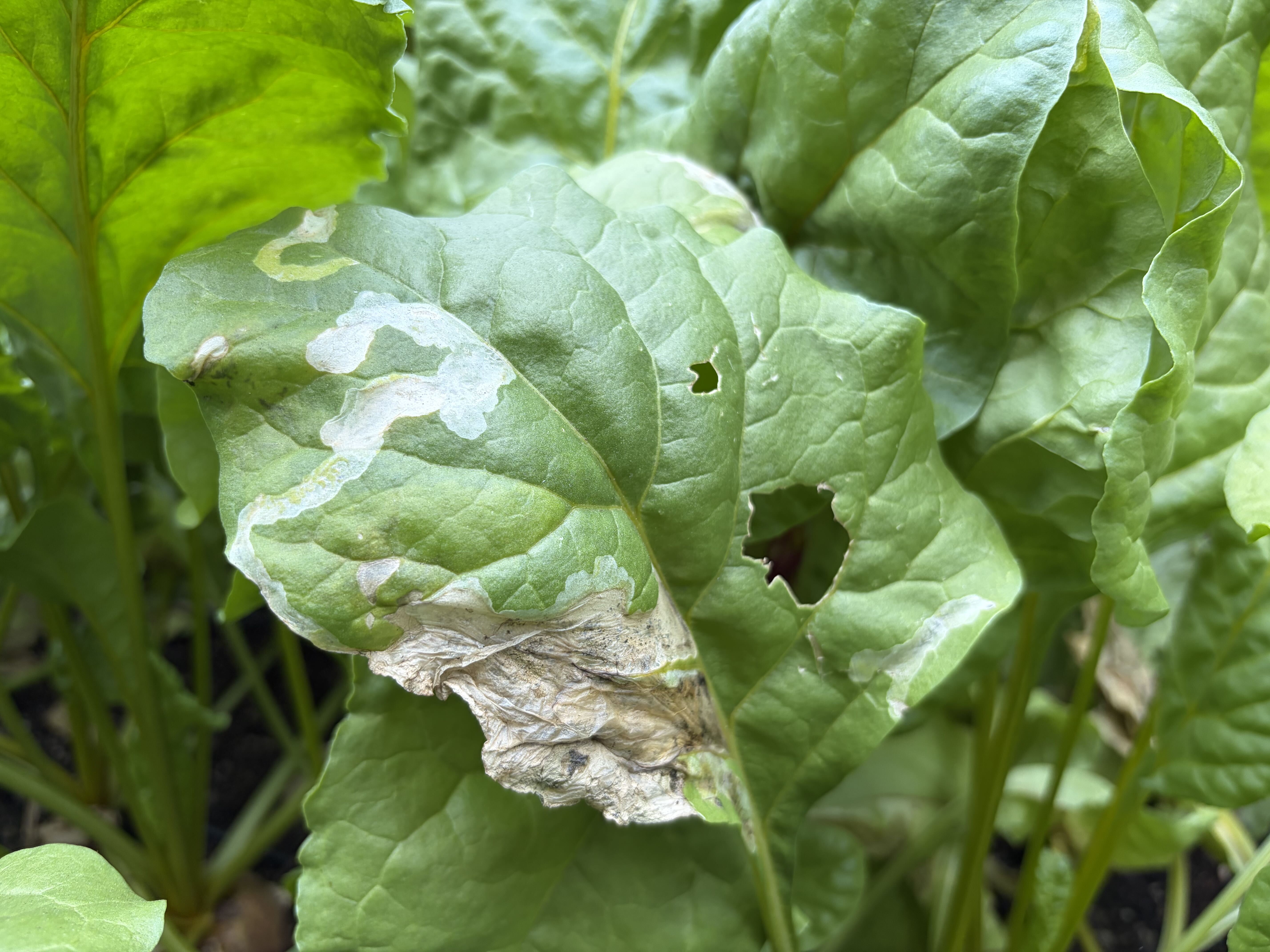
Yellowish leaf miner damage on the left and jagged hole created by bird nibbles on the right.
Small birds also love to feed on swiss chard, particularly in the winter when other food sources are scarce. You can recognize bird damage on the leaves by its distinctive jagged holes made by tiny beaks. If you don’t mind a few holes, bird damage does not actually make the plants dangerous to eat - and the simplest (and most zen) option might be to accept a certain level of damage. But if the birds are eating the chard down to the ribs, you can keep plants covered with the same insect netting we use to protect against leafminers or another kind of physical barrier.
Whether you grow chard in the spring or fall, for culinary use or aesthetics, for yourself or the birds - we are confident these tips will lead you to success! Happy growing!
Amelia Barker (she/her)
Originally from New York, Amelia moved to Oregon in 2016 and has been farming ever since. She has worked on and managed farms from 16 acre mixed veggies to an intensive half acre of cut flowers. Her love of plants also manifested at school educational gardens, a genomics lab at a botanical garden, a seed saving nonprofit in Bangalore, India, and flower shops across the country. When she’s not puttering in the garden, find Amelia working on a sewing project or exploring a new park with her daughter.


